Author: Patrice

To remember (TCO Hino L8 vs Freightliner M2): In our 5-year (400,000 km) scenario, the Hino L8 costs less to operate than the Freightliner M2, even though both trucks are comparable for a 26-foot box. Lower total TCO: $470,626 vs. $507,197 → savings of around $36,571 over 5 years Lower cost per km: $1.18/km vs. $1.27/km → you pay ~$0.09 less per km Monthly savings: $7,844/month vs. $8,453/month → ~$610/month saved What’s in it for you? The Hino L8 reduces the big items that count: fuel (25 L/100 km) and downtime (less cost when the truck is immobilized), which directly protects your margin. 👉 Conclusion: if your goal is to have a profitable, predictable and economical truck for the long term, the Hino L8 is the best choice in this scenario. Download our free TCO calculator! Keep your free TCO calculator on your device for life. Download our TCO calculator (Total Cost of Ownership) Your first name Your surname Enter your e-mail address Enter your phone number Download the calculator Overview of the TCO calculator you’re about to get Download our TCO calculator (Total Cost of Ownership) Overview of the TCO calculator you’re about to get Download the calculator TCO Hino L8 vs Freightliner M2: the real comparison (total cost of ownership) for choosing the right 28-foot box truck A truck may look “cheaper” on the order form… but cost a lot more once it’s on the road. The right metric is TCO (Total Cost of Ownership): what the truck actually costs you per month and per kilometer. In this guide (ready-to-publish blog format), we compare a concrete Hino L8 vs Freightliner M2 scenario in typical Quebec / Greater Montreal distribution use (28′ box truck), and highlight why the Hino L8 has the TCO advantage when we look at the real cost items. Why TCO is more important than purchase price The TCO adds up the items that (really) make for profitability: Purchase + interest Fuel Maintenance + tires Insurance + registration Downtime Resale value (deducted at end) 👉 The final result gives two figures that are easy to compare: Actual cost / km Average cost / month The “real-life” method: how to calculate a TCO without lying to yourself TCO = (Purchase + Interest + Fuel + Maintenance + Tires + Insurance + Registration + Downtime) – Resale value Fuel formula (5 years) Carburant = (km/an × 5) × (L/100 km ÷ 100) × prix du diesel Cost/km formula Coût/km = TCO total ÷ km totaux Scenario assumptions (adjusted according to your figures) Duration: 60 months (5 years) Mileage: 80,000 km/year → 400,000 km over 5 years Diesel price : 1,85 $/L Financing (example): 6.99% APR, 15% down payment Downtime cost : 450/day Average consumption : Hino L8: 25.0 L/100 km Freightliner M2: 26.5 L/100 km (scenario reference) TCO comparison Hino L8 vs Freightliner M2: figures (5 years) Cost item (5 years) Hino L8 (scenario) Freightliner M2 (scenario) Purchase price (truck + box) 195 000 $ 205 000 $ Down payment (15%) (info) 29 250 $ 30 750 $ Interest (60 months, 6.99%) 31 126 $ 32 722 $ Fuel (400,000 km) 185 000 $ 196 100 $ Maintenance & consumables (excluding tires) 68 000 $ 76 000 $ Tires 12 000 $ 12 500 $ Insurance 36 000 $ 36 000 $ Registration & miscellaneous 9 000 $ 9 000 $ Downtime (immobilization) 4 500 $ 7 875 $ Resale value (deducted) -70 000 $ -68 000 $ Total TCO (5 years) 470,626 507,197 Actual cost/km 1.18/km 1.27/km Average cost / month (all-inclusive) 7,844/month 8,453/month Assumptions: 60 months, 80,000 km/year (400,000 km), diesel $1.85/L, downtime $450/day, Hino L8 consumption 25 L/100 km, M2 consumption 26.5 L/100 km. Results (clear and publishable) ✅ In this scenario, the Hino L8 costs ~$36,571 less over 5 years, or about : 0.09/km less ~$610/month less Download our free TCO calculator! Keep your free TCO calculator on your device for life. Download our TCO calculator (Total Cost of Ownership) Your first name Your surname Enter your e-mail address Enter your phone number Download the calculator Overview of the TCO calculator you’re about to get Download our TCO calculator (Total Cost of Ownership) Overview of the TCO calculator you’re about to get Download the calculator Or calculate your TCO here Online TCO calculator (click to view) Calculateur TCO Camion Hino Sorties : TCO annuel + TCO par km (avec options TPS/TVQ, pneus et downtime) Prix d’achat (avant taxes) — $ Prix de revente (fin période) — $ Période d’analyse — années Kilométrage annuel — km/an Consommation — L/100 km Prix du diesel — $/L Autres coûts annuels — maintenance + assurance + plaque ($/an) Options Inclure TPS/TVQ Par défaut : TPS 5% + TVQ 9,975% TPS (GST) — % TVQ (QST) — % Taxes payées… Comptant (au départ)Financées (ajoutées au prêt) Mise de fonds appliquée sur… Prix avant taxesPrix + taxes Taxes calculées sur le prix avant taxes (TPS + TVQ). *(Modèle QC standard.)* Inclure pneus Budget annuel ou calcul au km Budget pneus annuel ($/an) OU coût d’un ensemble pneus ($) Durée de vie estimée (km) Si “Budget pneus annuel” > 0 → utilisé en priorité. Sinon : (coût ensemble ÷ durée de vie) × km/an. Inclure downtime (pertes / location / remorquage) Jours/an × coût/jour ou budget annuel Downtime — budget annuel ($/an) OU jours d’arrêt par an (jours/an) Coût par jour d’arrêt ($/jour) Si “budget annuel” > 0 → utilisé en priorité. Sinon : jours/an × coût/jour. Financement (optionnel) Taux d’intérêt annuel (APR %) Terme du prêt (mois) Mise de fonds Pourcentage (%)Montant ($) Valeur mise de fonds Calculer Réinitialiser Auto-calcul activé Formule TCO (annuel) = Dépréciation + Carburant + Autres coûts annuels + Pneus + Downtime + Intérêts (moyennés sur la période) + Taxes (si comptant, amorties sur la période; si financées, incluses via le prêt). Résultats TCO annuel • TCO par km • cashflow mensuel (indicatif) TCO annuel $— — TCO par km $— — Dépréciation (annuelle)(achat −

At a glance (Hino L7 TCO): TCO corresponds to the total real cost of a truck over the period: loss of value (purchase-resale) + fuel + annual charges (maintenance/insurance/plate) + interest (in this scenario). Calculation assumptions: Hino L7 purchased $140,000, resold $75,000 after 5 years, use 60,000 km/year, diesel at $1.85/L, average consumption 24 L/100 km, annual expenses $18,000, financing 7.99% over 60 months with 15% down payment. Loss of value: approx. $13,000/year. Fuel: approximately $26,640/year. Financing: $21,000 down payment, $119,000 financed, payment of approximately $2,412.32/month, for a total of approximately $25,739.29 in interest over 5 years. ➡️ Overall result: the Hino L7 TCO comes to ≈ $62,787.86/year, or ≈ $1.05/km, and ≈ $313,939.29 over 5 years (net, after resale). Monthly “field” cashflow (payment + fuel + charges): ≈ $6,132.32/month. Major cash flows: -$21,000 at start (down payment) then +$75,000 at end (resale). The most sensitive factor: fuel consumption: driving 60,000 km/year, each +1 L/100 km adds around $1,110/year (diesel at $1.85/L). What influences TCO the most: actual consumption, diesel price, resale value, and control of annual costs (maintenance/insurance/plate). Download our free TCO calculator! Keep your free TCO calculator on your device for life. Download our TCO calculator (Total Cost of Ownership) Your first name Your surname Enter your e-mail address Enter your phone number Download the calculator Overview of the TCO calculator you’re about to get Download our TCO calculator (Total Cost of Ownership) Overview of the TCO calculator you’re about to get Download the calculator Total Cost of Ownership Hino L7 full calculation + cashflow (5-year scenario / 60,000 km/year) A price written on an order form is not enough to judge whether a truck is really profitable. To make an informed decision, it’s better to look at the Total Cost of Ownership (TCO ): all the real expenses accumulated over the years and the kilometers depreciated, fuel, maintenance, insurance, registration, financing, etc., then take into account the resale value at the end of the term to obtain the net cost. In the category of 6-wheelers around 33,000 lbs GVWR, the Hino L7 is a robust and versatile option. Whether for transport (26 to 28 foot box, distribution, fleet) or operations requiring greater capacity, it’s not the price that matters, but what the truck represents in terms of cost per kilometer and monthly cashflow. That’s exactly the approach Groupe National Hino Rive-Sud favors: aligning the right truck configuration with your operating reality – type of use, budget, load, and performance objectives. In this article, we use a concrete scenario of 7.99% financing over 60 months with a 15% down payment to calculate the TCO of the Hino L7, then show you how to quickly adapt the model to your own data: annual mileage, actual consumption, diesel price, annual costs, resale value and other key parameters. Definition: What is TCO (total cost of ownership)? TCO adds up truck-related costs over a period of time (often 3 to 7 years): Depreciation: (purchase price – resale value) Fuel Annual costs: maintenance, insurance, license plate Financing: interest (if applicable) (Optional) tires, downtime, replacement vehicle, telematics, etc. 👉 In the end, you want 2 simple numbers: $/km / month (cashflow) Why it’s useful Because two trucks can have a similar purchase price… but cost very differently: one consumes more than the other one retains its value better (and therefore has a higher resale value) one has higher maintenance costs one makes you lose more time in downtime 👉 The TCO allows you to compare “apples to apples” and decide with a concrete figure: Annual TCO (budget) TCO per km (profitability / operating cost) 2) Scenario assumptions (basic figures) Let’s take a fairly neutral, standard scenario for the transport industry: Hino L7 (chassis cab only: no equipment) – Purchase price: $140,000 Resale after 5 years: $75,000 Usage: 60,000 km/year Horizon: 5 years (300,000 km) Diesel: $1.85/L Average fuel consumption: 24 L/100 km Other costs (maintenance + insurance + plate): ≈ $18,000/year Financing: 7.99% over 60 months Down payment: 15% or $21,000 Please note taxes (GST/QST), administration fees, tires, downtime and consumption variations (city/highway/load/ralentiate) are not included here, to keep the model clear and comparable. 3) Hino L7 TCO calculation (step-by-step) A) Annual depreciation Dépreciation = (140 000 $-75 000 $)/5 years =13 000$/year ✅ Depreciation: $13,000/year B) Annual fuel (24 L/100 km) with 60,000 km/year Litres/year : 60 000×24/100 = 14 400 L/year Cost/year : 14 400×1,85 = 26 640 $/year ✅ Fuel: $26,640/year C) Other annual costs (Approximately $18,000/year) ✅ Maintenance + insurance + plate: ≈ $18,000/year D) Financing (7.99% over 60 months, 15% down payment) Downpayment: $140,000 × 15% = $21,000 Amount financed: $140,000 – $21,000 = $119,000 Monthly payment (60 months): $2,412.32/month Total interest over 5 years: $25,739.29→ annual average: $5,780.15/year ✅ Interest (annual average): $5,147. 86/year 4) Hino L7 TCO results (final figures) ✅ Hino L7 annual TCO 13 000 + 26 640 + 18 000 + 5 147,86 = 62 787,86 $/year ➡️ Annual TCO ≈ $62,787.86 /year ✅ Hino L7 TCO per km 62 787,86 $ / 60 000 km = 1,0465 $/km ➡️ TCO ≈ $1.05/km ✅ Net cost over 5 years (after resale) of the Hino L7 62,787.86/year × 5 years = 313 939,29 $ ➡️ Net cost 5 years ≈ $313,939 5) CASHFLOW version: what you actually get out (monthly + yearly) Cashflow is what helps you decide quickly: how much you take out each month to operate the truck. A) Monthly cash flow (months 1 to 60) Financing payment: $2,412.32/month Fuel + other monthly costs: ($26,640 + $18,000) / 12 months = $3,720.00/month ✅ Monthly recurring total: 2,412.32 + $3,720.00 = $6,132.32/month ➡️ Monthly cashflow ≈ $6,132.32/month B) One-off flows Day 0: $21,000 down payment Month 60: resale +$75,000 ➡️ In month 60, you have a net cash flow of approximately: +75,000 – 6,132.32 = +$68,867.68 C) Annual cash flow (“management” view) Each year (1 to 5), you have : Annual payments: $2,412.32 × 12 ≈ $28,947.86 Fuel: $26,640 Other costs: $18,000 ✅

Summary : TCO (total cost of ownership) = depreciation + fuel + annual costs (maintenance/insurance/plate) + interest on financing (in this scenario). Scenario used: Hino L6 at $130,000 (purchase) → $70,000 (resale), 5 years, 60,000 km/year, diesel $1.85/L, average consumption 23 L/100 km, other costs $18,000/year, financing 7.99% / 60 months with 15% down payment. Depreciation: $12,000/year (130,000 – 70,000 ÷ 5). Fuel: $25,530/year (13,800 L/year × $1.85). Financing: down payment $19,500, amount financed $110,500, payment ≈ $2,240.01/month, total interest ≈ $23,900.77 over 5 years. Hino L6 TCO result: ≈ $60,310.15/year, or ≈ $1.01/km, and ≈ $301,550.77 net over 5 years (after resale.) Monthly recurring cashflow (payment + fuel + annual costs): ≈ $5,867.51/month. Major flows: -$19,500 at start (downpayment) and +$70,000 at end (resale). Lever #1: consumption by driving 60,000 km/year, +1 L/100 km = $1,110/year (on diesel at $1.85/L). What really moves the TCO: fuel consumption, diesel price, resale value, and stability of annual costs (maintenance/insurance/plate). Download our free TCO calculator! Keep your free TCO calculator on your device for life. Download our TCO calculator (Total Cost of Ownership) Your first name Your surname Enter your e-mail address Enter your phone number Download the calculator Overview of the TCO calculator you’re about to get Download our TCO calculator (Total Cost of Ownership) Overview of the TCO calculator you’re about to get Download the calculator Total Cost of Ownership Hino L6 full calculation + cashflow (5-year scenario / 60,000 km/year) A price on a purchase order doesn’t say much about a truck’s profitability. To make an informed decision, it’s best to look at the Total Cost of Ownership (TCO): everything the vehicle actually costs you over time and kilometers – depreciation, fuel, maintenance, insurance, registration, financing, and more – then subtract the resale value at the end of the term. In the category of 6-wheelers around 26,000 lb GVWR, the Hino L6 stands out as a solid choice. Transport (20/26-foot box, distribution, fleet) or light towing within the limits of a class 5 license, the key factor is not the price, but what the truck represents in terms of cost/km and monthly cashflow. This is the type of analysis that Groupe National Hino Rive-Sud puts forward to align the truck with your reality: use, budget and operating objectives. In this article, we start with a concrete scenario ( 7.99% financing with 15% down payment) to calculate the TCO of the Hino L6, then show you how to easily adjust the model to your data (annual mileage, fuel consumption, diesel price, resale value, etc.). 1) What exactly is TCO? TCO adds up all the real costs involved in operating the truck: Depreciation (purchase – resale) Financing (interest, fees) Fuel Preventive maintenance (scheduled services) Repairs/contingencies Tires/brakes Insurance + registration/license Downtime: towing, delays, replacement rentals, loss of opportunity 👉 The right indicator to compare two trucks is generally: $/km Why it’s useful Because two trucks can have a similar purchase price… but cost very differently: one consumes more than the other one retains its value better (and therefore has a higher resale value) one has higher maintenance costs one makes you lose more time in downtime 👉 The TCO allows you to compare “apples to apples” and decide with a concrete figure: Annual TCO (budget) TCO per km (profitability / operating cost) 2) Scenario assumptions (basic figures) Let’s take a fairly neutral, standard scenario for the transport industry: Hino L6 (chassis cab only: no equipment) – Purchase price: $130,000 Resale after 5 years: $70,000 Usage: 60,000 km/year Horizon: 5 years (300,000 km) Diesel: $1.85/L Average fuel consumption: 23 L/100 km Other costs (maintenance + insurance + plate): ≈ $18,000/year Financing: 7.99% over 60 months Down payment: 15% or $19,500 Please note taxes (GST/QST), administration fees, tires, downtime and consumption variations (city/highway/load/ralentiate) are not included here, to keep the model clear and comparable. 3) Hino L6 TCO calculation (step-by-step) A) Annual depreciation Dépreciation = (130 000 $-70 000 $)/5 years =12 000$/year ✅ Depreciation: $12,000/year B) Annual fuel (23 L/100 km) with 60,000 km/year Litres/year : 60 000×25/100 = 13 800 L/year Cost/year : 13 800×1,85 = 25 530 $/year ✅ Fuel: $25,530/year C) Other annual costs (Approximately $18,000/year) ✅ Maintenance + insurance + plate: ≈ $18,000/year D) Financing (7.99% over 60 months, 15% down payment) Downpayment: $130,000 × 15% = $19,500 Amount financed: $130,000 – 19,500 = $110,500 Monthly payment (60 months): $2,240.01/month Total interest over 5 years: $23,900.77→ annual average: $4,780.15/year ✅ Interest (annual average): $4,780. 15/year 4) Hino L6 TCO results (final figures) ✅ Hino L6 annual TCO 12 000 + 25 530 + 18 000 + 4 780,15 = 60 310,15 $/year ➡️ Annual TCO ≈ $60,310.15/year ✅ Hino L6 TCO per km 60 310,15 $ / 60 000 km = 1,0052 $/km ➡️ TCO ≈ $1.01/km ✅ Net cost over 5 years (after resale) of the Hino L6 60,310.15/year × 5 years = 301 550,77 $ ➡️ Net cost 5 years ≈ $301,551 5) CASHFLOW version: what you actually get out (monthly + yearly) Cashflow is the reality on the ground: how much the truck costs you per month to run. A) Monthly cash flow (months 1 to 60) Financing payment: $2,240.01/month Fuel + other monthly costs: (25 530$ + 18 000$) / 12 months = 3 627,50 $/mois ✅ Monthly recurring total: 2 240,01 $+ 3 627,50 $ = 5 867,51 $/month ➡️ Monthly cashflow ≈ $5,867.51/month B) One-off flows Day 0: $19,500 down payment Month 60: resale +$70,000 ➡️ In month 60, you have a net cash flow of approximately: +70,000 – 5,867.51 = +$64,132.49 C) Annual cash flow (“management” view) Each year (1 to 5), you have : Annual payments: $2,240.01 × 12 ≈ $26,880.15 Fuel: $25,530 Other costs: $18,000 Annual total ≈ $70,410.15/year Year 5: + $70,000 (resale) D) Verification: net cash cost over 5 years Total cash out = down payment + 60 payments + (fuel + other costs × 5)= $19,500 + $134,400.77 + $217,650= $371,550.77 Resale income = $70,000 ✅

✅ At a glance: Hino L8 total cost of ownership TCO (total cost of ownership) = depreciation + fuel + annual costs (maintenance/insurance/plate) + interest on financing (in this scenario). Scenario used: Hino L8 at $145,000 (purchase) → $80,000 (resale), 5 years, 60,000 km/year, diesel $1.85/L, average consumption 25 L/100 km, other costs $18,000/year, financing 7.99% / 60 months with 15% down payment. Depreciation: $13,000/year (145,000 – 80,000 ÷ 5). Fuel: $27,750/year (15,000 L/year × $1.85). Financing: down payment $21,750, amount financed $123,250, payment ≈ $2,498.48/month, total interest ≈ $26,658.55 over 5 years. Hino L8 TCO result: ≈ $64,082/year, i.e. ≈ $1.07/km, and ≈ $320,409 net over 5 years (after resale). Monthly recurring cashflow (payment + fuel + annual costs): ≈ $6,125.98/month. Major flows: -$21,750 at start (downpayment) and +$80,000 at end (resale). Lever #1: consumption by driving 60,000 km/year, +1 L/100 km = $1,110/year (on diesel at $1.85/L). What really moves the TCO: fuel consumption, diesel price, resale value, and stability of annual costs (maintenance/insurance/plate). Download our free TCO calculator! Download our TCO calculator (Total Cost of Ownership) Your first name Your surname Enter your e-mail address Enter your phone number Download the calculator Overview of the TCO calculator you’re about to get Download our TCO calculator (Total Cost of Ownership) Overview of the TCO calculator you’re about to get Download the calculator Total Cost of Ownership (TCO) of a Hino L8 full calculation + cashflow (5-year scenario /60,000 km/year) Buying a truck isn’t just about “a price on an invoice”. The real figure that determines whether your truck is profitable is the Total Cost of Ownership (TCO ): everything the truck costs you per month and per kilometer, over its lifetime… minus the resale value. If you’re thinking of buying a 6-wheel truck with a GVWR of 35,000 lbs, the Hino L8 is for you. For hauling (20/28-foot box, distribution, fleet) or towing, the price on the invoice is only a small part of the story. What really counts is the TCO Hino L8 or Total Cost of Ownership of the Hino L8: everything the truck will cost you over 5 years, per km, and above all in cash outflow. In this article, we’ll give you a concrete example based on a realistic scenario, with financing at 7.99% and a down payment of 15%, then show you how to adapt it to YOUR reality. 1) What exactly is TCO? TCO adds up all the real costs involved in operating the truck: Depreciation (purchase – resale) Financing (interest, fees) Fuel Preventive maintenance (scheduled services) Repairs/contingencies Tires/brakes Insurance + registration/license Downtime: towing, delays, replacement rentals, loss of opportunity 👉 The right indicator to compare two trucks is often: $/km. 2) Scenario assumptions (basic figures) Let’s take a fairly neutral, standard scenario for the transport industry: Hino L8 (chassis cab only: no equipment) – Purchase price: $145,000 Resale after 5 years: $80,000 Usage: 60,000 km/year Horizon: 5 years (300,000 km) Diesel: $1.85/L Average fuel consumption: 25 L/100 km Other costs (maintenance + insurance + plate): ≈ $18,000/year Financing: 7.99% over 60 months Down payment: 15% or $21,750 Please note taxes (GST/QST), administration fees, tires, downtime and consumption variations (city/highway/load/ralentiate) are not included here, to keep the model clear and comparable. 3) Hino L8 TCO calculation (step-by-step) A) Annual depreciation Dépreciation = (145 000 $-80 000 $)/5 years =13 000$/year ✅ Depreciation: $13,000/year B) Annual fuel (23 L/100 km) with 60,000 km/year Litres/year : 60 000×25/100 = 15 000 L/year Cost/year : 15 000×1,85 = 27 750 $/year ✅ Fuel: $27,750/year C) Other annual costs (Approximately $18,000/year) ✅ Maintenance + insurance + plate: ≈ $18,000/year D) Financing (7.99% over 60 months, 15% down payment) Downpayment: $145,000 × 15% = $21,750 Amount financed: $145,000 – 21,750 = $123,250 Monthly payment (60 months): $2,498.48/month Total interest over 5 years: $26,658.55→ annual average: $5,331.71/year ✅ Interest (annual average): $5,331.71/year 4) Hino L8 TCO results (final figures) ✅ Hino L8 annual TCO 13 000 + 27 750 + 18 000 + 5 331,71 = 64 081,71 $/year ➡️ Annual TCO ≈ $64,082/year ✅ Hino L8 TCO per km 64 081,71 $ / 60 000 km = 1,0680 $/km ➡️ TCO ≈ $1.07/km ✅ Net cost over 5 years (after resale) of the Hino L8 64 081,71/year × 5 years = 320 408,55 $ ➡️ Net cost 5 years ≈ $320,409 5) CASHFLOW version: what you actually get out (monthly + yearly) Cashflow is the reality on the ground: how much you take out per month to drive. A) Monthly cash flow (months 1 to 60) Financing payment: $2,498.48/month Fuel + other monthly costs: (27 750$ + 18 000$) / 12 months = 3 812,50 $/mois ✅ Monthly recurring total: 2 498,48 $+ 3 812,50 $ = 6 310,98 $/mois ➡️ Monthly cashflow ≈ $6,310.98/month B) One-off flows Day 0: down payment -$21,750 Month 60: resale +$80,000 ➡️ In month 60, you have a net flow of approximately: +$80,000 – $6,310.98 = +$73,689.02 C) Annual cash flow (“management” view) Each year (1 to 5), you have : Annual payments: $2,498.48 × 12 ≈ $29,982 Fuel: $27,750 Other costs: $18,000 Annual total ≈ $75,732/year Year 5: + $80,000 (resale) D) Verification: net cash cost over 5 years Total cash out = down payment + 60 payments + (fuel + other costs × 5)= $21,750 + $149,908.55 + $228,750= $400,408.55 Resale entry = $80,000 ✅ 5 -year net cash cost = $320,408.55(= exactly your 5-year net TCO) 6) Summary (Table): TCO of the Hino L8 Hino L8 – Example with figures5 ans60 000 km/yearDiesel 1,85 $/Lconsu 25 L/100Rate 7,99% (60 months)Deposit 15% Table 1: TCO (Total Cost of Ownership) of the Hino L8 – Summary Cost item Annual ($) On 5 years ($) Hypothesis / detail Depreciation 13 000,00 65 000,00 (145 000 − 80 000) ÷ 5 Fuel 27 750,00 138 750,00 60 000 km/year × 25 L/100 × 1,85 $/L Others cost (maintenance + insurance + license plate) 18 000,00 90 000,00 Fixed annual Budget Interest
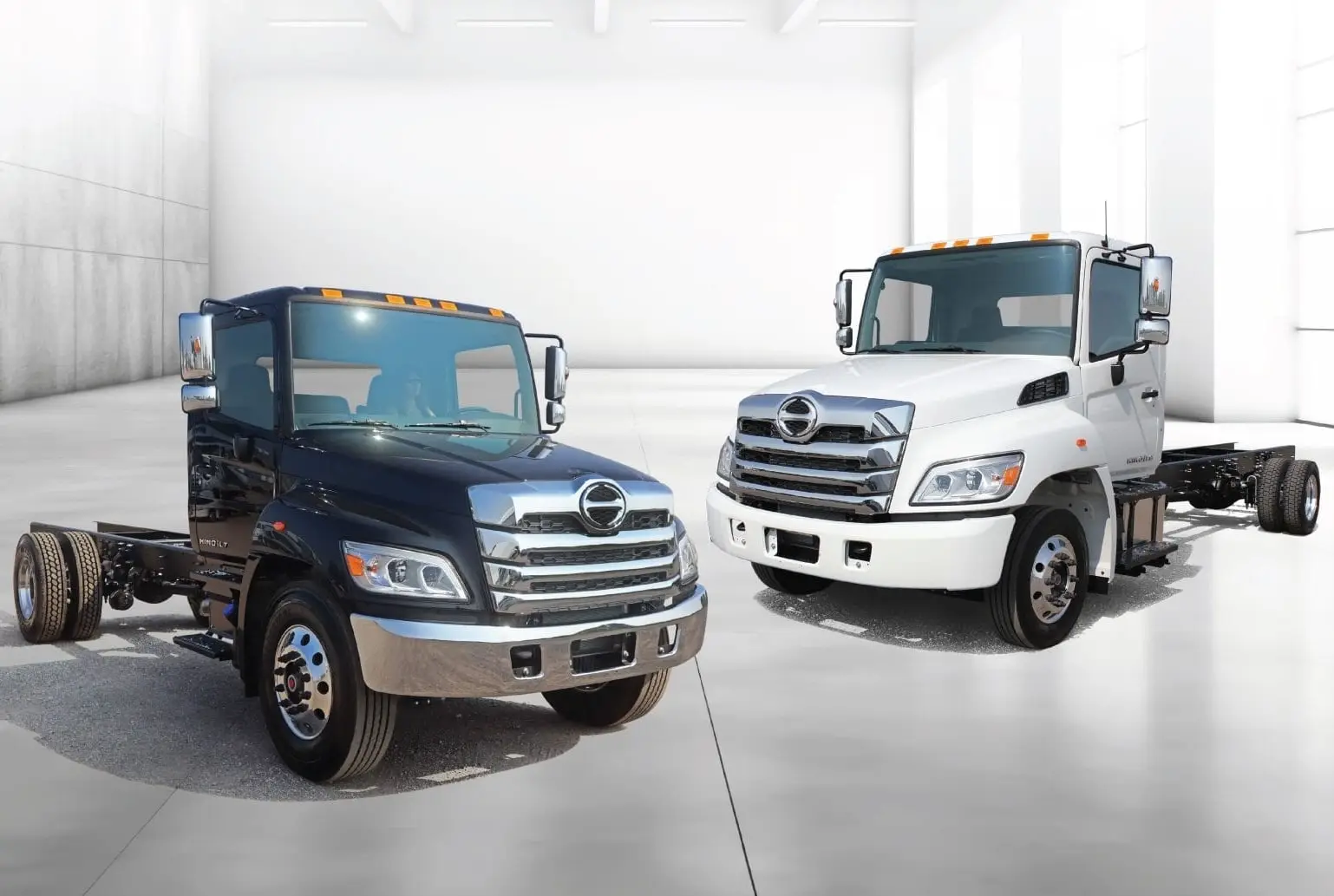
✅ At a glance: Hino L6, Hino L7 and Hino L8 Hino L6: 26,000 lb GVWR | Cummins B6.7 engine (240-260 hp, 560-660 lb-ft) | Allison 2200 RDS transmission | Ideal for light to medium loads and urban deliveries. Hino L7: 33,000 lb GVWR | Cummins B6.7 engine (260 hp, 660 lb-ft) | Allison 2500 RDS transmission | Perfect for medium loads, regional transport and utilities. Hino L8: 35,000 lb GVWR | Cummins B6.7 engine (260 hp, 660 lb-ft) | Allison 3000 RDS transmission | Designed for heavy loads, construction and specialized freight. 🔧 Common features: 80,000 PSI steel chassis, galvanized cab, reliable Cummins B6.7 engines, automatic Allison transmissions, advanced safety (OnGuardACTIVE™, OnLaneALERT™). 🇨🇦 Canadian-made: produced in Woodstock (Ontario) and adapted to road conditions in Quebec and Canada. ✅ Key applications: urban delivery, regional transport, local and regional towing, construction, distribution and municipal fleets. Motorization, Capacity, Transmission Hino L Series model Hino L6 (formerly the Hino 268) Hino L7 (formerly the Hino 338) Hino L8 (formerly the Hino 358) Engine Cummins B6.7, 6 cylinders, 6.7 L Cummins B6.7, 6 cylinders, 6.7 L Cummins B6.7, 6 cylinders, 6.7 L Power 240 to 260 hp 260 hp 260 hp Couple 560 to 660 lb-ft 660 lb-ft 660 lb-ft Transmission Allison 2200 RDS Allison 2500 RDS Allison 3000 RDS GVWR 25,500 to 26,000 lb 33,000 lb 35,000 lb Capacity Front axle 10,000 lbs 12,000 lbs 14,000 lbs Rear axle capacity 19,000 lbs 21,000 lbs 23,000 lbs Not sure which Hino L6, L7 and L8 trucks are right for your business? Discover the detailed technical specifications of these L-Series models, specially designed for the Canadian market. Compare their performance, possible configurations and ideal applications to choose the perfect truck for your business needs. The Hino L-Series: A complete range of high-performance trucks Origins and positioning of the Series L range Hino’s L-Series are conventional medium-duty trucks produced in Woodstock, Ontario, and designed to offer a solution tailored to the requirements of the Canadian market. Since its launch in 2006, the L Series has established itself as a versatile solution thanks to local manufacturing and the integration of North American technologies proven for Canadian conditions. Features common to all L Series models All models share an 80,000 PSI steel chassis, a galvanized cab and a six-speed Allison automatic transmission for reliability on Canadian roads. The Cummins B6.7 engine, available in two configurations, powers the entire range. Its Single Module aftertreatment system meets the most stringent Canadian environmental standards. Competitive advantages of L-Series in Canada The L Series boasts an extended warranty, simplified financing via Toyota Industries Commercial Finance and a nationwide network of certified dealers for local service. Present in over 50 dealerships across Canada, the L Series benefits from a qualified technical network, available original parts and 24/7 assistance for ongoing operations. The Hino L6: Performance and versatility for light to medium loads Model L6 technical specifications Hino L6 technical specifications Features Specification Benefits GVWR 26,000 lbs Suitable for light to medium loads Engine Cummins B6.7 6.7L Low emissions, proven reliability (13M units) Power 260 hp Adaptation to power requirements Torque 660 lb-ft Performance in real-life conditions Transmission Allison 2200 RDS Fuel economy, simplified driving Axle capacities Front: 10,000 lbs / Rear: 19,000 lbs Optimum load distribution Dimensions Wheelbase: 175-271″ / Length: 295-408.6″ / Width: 95.7-96.3″ / Height: 103-106.9″ Body flexibility Fuel tank 50 or 90 US gallons + 7 DEF gallons Variable range depending on mission Frame 80,000 psi steel Outstanding durability Brake systems Hydraulic disc or air drum with ABS Optimum safety Security technologies OnGuardACTIVE, OnLaneALERT, ESC Active driver and cargo protection Cab comfort Air-suspension seat, electric windows, heated mirrors Comfortable ride Warranty 5 years or 280,000 km Full coverage The Hino L6 has a GVWR of 26,000 lbs, making it suitable for light to medium loads in a wide variety of professional applications. Equipped with the Cummins B6.7 engine, the Hino L6 delivers 260 horsepower and 660 lb-ft of torque for smooth performance. L6 transmission and suspension options The Hino L6 comes standard with an Allison 2200 RDS transmission, renowned for its reliability and fuel efficiency in Canadian urban operations. Multi-leaf spring rear suspension is standard on the L6, while an optional Hendrickson air suspension enhances ride comfort and protects sensitive cargo. Possible configurations and ideal applications The Hino L6 can be adapted to various configurations: dry box, van, tow truck or tanker, thanks to the customized solutions available from Hino dealers across Canada. The Hino L6 adapts to a variety of professional needs thanks to its versatility and optimized configuration for light to medium loads. Hino truck ideal for couriers and landscapers in urban deliveries thanks to its manoeuvrability and adapted load capacity Preferred partner for local transport and multi-purpose applications with proven reliability over short and medium distances Robust solution for regional transport in rural areas of Quebec with its resistance to varied conditions Strategic choice for distribution companies looking for enhanced safety thanks to its ergonomic cab and modern equipment Safety equipment and cabin comfort The Hino L6 includes advanced safety systems such as OnGuardACTIVE for emergency braking, OnLaneALERT for lane departure warning and electronic stability control. The Hino L6 cab features a standard air-suspension seat, ergonomic driver’s station and sound insulation for a calming driving experience on Canadian roads. The Hino L7: robust and efficient for medium loads Distinctive L7 technical features The Hino L7 has a GVWR of 33,000 lbs, positioning it between the L6 and L8 for applications requiring medium loads with greater structural strength. Equipped with the Cummins B6.7 engine, rated at 260 hp and 660 lb-ft of torque, the L7 offers more power than the L6 for intensive on-road use. Transmission system and chassis options The Hino L7’s Allison 2500 RDS transmission ensures better management of medium loads, with optimized fuel consumption and increased durability compared to the L6’s 2200 RDS. The 80,000 PSI high-strength steel chassis is an exclusive option for the Hino L7, reinforcing its ability to withstand heavy loads

✅ At a glance: Hino truck maintenance Rigorous preventive maintenance extends service life and prevents unexpected breakdowns. Recommended oil change:– 10,000 km (Hino 155, 195)– 15,000 km (Hino 258, 268, 338, 358)– 25,000 to 30,000 km (Hino L6, L7, L8, XL8) Coolant change:– 240,000 km or 4 years (J05E, J08E models)– 500,000 km or 4 years (Cummins B6.7, L9 models) Key points to check: brakes, tires, fluids, filters, engine lights. Hino’s certified technicians use original parts and protect your manufacturer’s warranty. In the event of a problem: HinoWatch’s 24/7 assistance service provides breakdown assistance and towing to an authorized center. Have you ever had to deal with an unexpected breakdown with your Hino truck, just when you thought everything was under control?Rigorous preventive maintenance is the key to avoiding unpleasant surprises and preserving the reliability of your Hino Québec truck, even after thousands of kilometers. In this article, you’ll discover tips on Hino truck maintenance and how to optimize the life of your vehicle through simple gestures, smart planning and the expertise of certified technicians, without compromising your warranty or your peace of mind. The preventive maintenance schedule: the cornerstone of Hino truck longevity Rigorous preventive maintenance ensures the reliability of Hino trucks by preventing unexpected breakdowns. By following a precise maintenance schedule, you prevent premature wear of components such as the Cummins engine. For example, a clogged air filter increases fuel consumption by 25%. Regular oil changes and scheduled inspections protect your unlimited mileage warranty, while limiting the costly repairs associated with neglected maintenance. Hino truck maintenance frequency: Oil and coolant change Hino model Motor Oil change frequency Coolant change frequency Hino 155 J05E (5.1 L, 4 cyl.) ≈ 10,000 km or 6 months ≈ 240,000 km or 4 years (Long Life Coolant) Hino 195 / 195H / 195C J05E (5.1 L, 4 cyl.) ≈ 10,000 km or 6 months ≈ 240,000 km or 4 years (Long Life Coolant) Hino 258 / 268 / 338 / 358 J08E (7.7 L, 6 cyl.) ≈ 15,000 km or 6 months ≈ 240,000 km or 4 years (Long Life Coolant) Hino L6 / L7 / L8 Cummins B6.7 (6.7 L, 6 cyl.) ≈ 25,000 to 30,000 km or 12 months ≈ 500,000 km or 4 years (Extended Life Coolant) Hino XL8 Cummins L9 (8.9 L, 6 cyl.) ≈ 25,000 to 30,000 km or 12 months ≈ 500,000 km or 4 years (Extended Life Coolant) By respecting the maintenance intervals recommended by Hino Canada, and by consulting the specifications of your Hino model, you protect your investment and maximize the residual value of your truck. Unplanned repairs can cost up to 3 times more than scheduled maintenance. For example, a clogged air filter reduces engine power and increases fuel costs. By using Hino-certified services, you preserve warranty coverage, which includes Cummins engines and transmissions. Irregular maintenance voids this protection, making mechanical repairs financially risky. Important checkpoints for your Hino truck Keeping an eye on your Hino truck’s engine, transmission and hydraulic components is crucial to its longevity. Check engine oil, brake fluid and tires regularly. Preventive maintenance prevents breakdowns and preserves performance, especially in Quebec conditions. Check brakes and steering for leaks or wear. Check tire pressure and inspect for cuts or damage. Check engine oil, coolant and brake fluid levels. Test all lights and wipers. A dirty filter reduces engine power and increases fuel consumption. Replacing filters ensures optimum filtration. This prevents mechanical damage and maintains warranty coverage, especially for Cummins engines used in Quebec. Detecting and preventing mechanical problems on your Hino An unexpected breakdown can be signaled by strange noises, red lights or abnormal smoke. HinoWatch, 24/7 assistance, helps you out in the event of a flat tire or breakdown. Contacting HinoWatch in Canada means stress-free, free towing to an authorized dealer. Excessive exhaust smoke, especially blue or black. Metallic noise or unusual vibration while driving. Check Engine” lights or sudden drop in engine power. Visible fluid leaks (oil, coolant, fuel). Hino’s certified technicians master the specific features of Cummins engines and transmissions. Their expertise prevents costly repairs by diagnosing problems early. Rely on Hino mechanical experts to protect your warranty and optimize performance. Their ongoing training and use of genuine parts ensure unfailing reliability, even in Quebec conditions. Planning rigorous preventive maintenance, watching for signs of mechanical problems and relying on genuine parts means years of service for your Hino truck. Contact a Hino dealer today: your vehicle deserves certified expertise for flawless performance, intact warranty coverage and stress-free unlimited mileage. Frequently asked questions about Hino truck maintenance (FAQ) How long does a Hino truck last? The average service life of a Hino truck ✅ In normal, well-maintained use, a Hino truck can easily reach : 500,000 to 700,000 km for light models (Hino 155, 195) 800,000 km to 1,000,000 km (1 million) for medium and heavy models (Hino 258, 338, 358, L6, L7, XL8) With a good mechanical follow-up, some Canadian fleets even report exceeding 1.2 million km, especially on chassis equipped with Cummins B6.7 or L9 engines. 🔧 Factors influencing service life : 📅 Regular maintenance (oil changes, fluids, brakes, SAAQ inspections) 🚚 Type of use (city, freeway, light or heavy loads) 🌡️ Climatic conditions (extreme cold, salt on Quebec roads) 🛠️ Quality of parts used (original Hino parts vs. aftermarket parts) 👷♂️ Driving habits (trained driver, defensive driving) 📈 How can you extend its lifespan? ✔️ Rigorous maintenance follow-up (in accordance with the Hino maintenance booklet)✔️ Use of telematics and on-board diagnostics (Hino Insight, Geotab) to anticipate breakdowns✔️ Compliance with tire and suspension loads and wear✔️ Rapid intervention in the event of signs of wear (leaks, vibrations, dashboard alerts) 🏁 Summary 👉 A Hino truck is an investment that can last 15 to 20 years, depending on use and maintenance.For companies looking for long-term profitability, it’s one of the best choices on the light and heavy truck market. Why is preventive maintenance crucial for Hino trucks? Rigorous preventive maintenance is essential to ensure the reliability

✅ What you will learn in this article: How Hino on-board technologies (telematics, active safety) are transforming fleet management How OneGuardACTIVE™ and OneLaneALERT™ systems protect your drivers and reduce accidents Concrete benefits: increased productivity, reduced breakdowns, fuel savings Why Hino telematics is more efficient and cost-effective than third-party solutions How Hino innovations contribute to the resale value and durability of your trucks Future Hino developments: AI, partial automation, customized interfaces Tired of juggling tracking tools, scattered safety alerts and unpredictable breakdowns? Hino’s on-board technologies, with their connected telematics and advanced safety systems (OneGuardACTIVE™, OneLaneALERT™), improve the management of your trucks into a smooth, safe operation. Find out how these innovations boost your productivity, cut costs and make the road a lot more serene turnkey solutions for the challenges of modern transport. Technological advances in Hino trucks: a complete overview Hino’s on-board technologies are transforming the transport business with tools like connected telematics and intelligent safety systems. Hino trucks equipped with OneGuardACTIVE™ and OneLaneALERT™, these innovations simplify driving and enhance safety on the road. The integration of remote diagnostics and driver assistance systems in Hino trucks is a game-changer for fleet managers. Native telematics transmit data in real time, facilitating predictive maintenance and optimized fleet management. Hino Series L illustrates this evolution with functionalities designed for the daily life of professionals. Hino telematics systems: intelligence at the heart of your trucks How the Hino INSIGHT (Hino EDGE) telematics system works Hino INSIGHT is a GPS-based web-based fleet management system. It monitors vehicle performance and sends alerts in the event of problems. Managers access data via the Hino Insight Dashboard portal. The system detects anomalies and anticipates maintenance requirements. It uses on-board sensors to collect and transmit data in real time. Hino diagnostic alerts are displayed on the associated application. GPS tracking and route optimization GPS tracking locates trucks in real time and records routes. Managers can visualize the progress of routes and receive alerts in the event of deviations. Geolocation data optimize routes in relation to traffic. Features Hino telematics system Third-party solutions Integration Native connectivity with Hino Ultimate portal (remote activation possible) Requires installation of external hardware (e.g. Geotab module) Initial costs No hardware/installation costs (OEM telematics included on some models) Purchase of additional equipment often required Interoperability Compatible with MyGeotab (for Geotab-equipped models) Extensive ecosystem of multi-brand compatibility Specific data Access to engine data and detailed diagnostics (OneGuardACTIVE™, OneLaneALERT™) General vehicle data (generic OBD) Fleet management Hino-Connect: business intelligence to optimize safety and performance Standardized tools without business customization Legend: Comparison of key functions between the Hino telematics system and third-party solutions, based on available information. Hino telematics optimizes journeys to save fuel. The system analyzes traffic in real time and suggests alternative routes. The Hino-Connect application alerts drivers in the event of detours or prolonged immobilization. Intelligent fleet management with Hino Managers monitor truck performance remotely. The system detects risky driving behavior and energy wastage. Alerts anticipate mechanical breakdowns. Real-time GPS tracking to optimize routes and save time Fuel consumption management to identify waste and reduce costs Anticipate maintenance needs thanks to precise data on vehicle condition Integration with Geotab for customized reports and in-depth analysis Factory-installed OEM telematics to avoid additional costs and simplify activation Proactive management reduces unplanned downtime. The system detects signs of wear before breakdown. Alerts anticipate maintenance needs. Data analysis improves Hino truck life. Data integration and advanced reporting Customized reports summarize key fleet data. Managers configure the indicators to be tracked. The Hino-Connect portal cross-references information with business tools. Telematics data guide strategic decisions. Managers adjust routes according to traffic flows. Consumption monitoring helps train drivers. Anticipating repairs reduces unforeseen costs. Advanced safety in Hino trucks: protecting drivers and goods OneGuardACTIVE™ brake assist system Hino equips its trucks with the OneGuardACTIVE™ system, an emergency braking assistance device. This system spots obstacles and intervenes automatically to reduce the risk of collision. OneGuardACTIVE™ protects drivers and other road users with rapid intervention in critical situations. Sensors detect sudden slowdowns and trigger emergency braking if the driver fails to react in time. This system reduces the risk of fender-benders at moderate speeds. OneLaneALERT™: constant vigilance on the road The OneLaneALERT™ system constantly monitors road markings. In the event of an unmarked deviation, a visual and audible signal alerts the driver to correct his trajectory. OneLaneALERT™ prevents drifts linked to drowsiness or distraction. A front sensor locates lane boundaries and detects unexpected exits. Early warning gives the driver time to react before the situation gets out of hand. Multi-angle camera systems for optimum visibility Hino trucks incorporate a network of cameras to eliminate blind spots. Lenses on the sides and rear provide a complete view around the vehicle. Cameras enhance manoeuvring and freeway safety. Wide angles show critical areas around the truck, while the interior display gives a clear picture even in limited conditions. Traditional mirrors give way to more aerodynamic systems. Integrating safety systems for comprehensive protection Hino safety technologies cooperate to wrap the truck in intelligent protection. OneGuardACTIVE™, OneLaneALERT™ and cameras share data to act in concert. Integrated approach protects vehicle, driver and cargo. Cross alerts enhance safety in all situations. Discover the 5 advantages of Hino trucks, especially when it comes to active safety. Daily benefits of Hino’s on-board technologies for professionals Improving driver productivity Hino technologies improve drivers’ daily lives, as explained in this article on enterprise integration(https://hinorivesud.com/camions-hino-flotte-entreprise). Tools like OneLaneALERT™ prevent unintentional drifts. Intelligent navigation reduces stress on the road. Drivers save time with GPS tracking. Real-time alerts warn of speed bumps. Do you have a question about Hino’s safety and on-board technologies? Call us today. Assistance systems make complex maneuvers easier. Optimizing operating costs Hino technologies reduce running costs. Telematics optimize routes to save fuel. See our Hino fuel economy guide for more details. Route tracking reduces costs. Maintenance alerts prevent costly repairs. Insurance systems reduce claims. Insurers often offer benefits for vehicles equipped with advanced safety features. Enhanced safety and regulatory compliance Active systems like OneGuardACTIVE™ limit accidents.
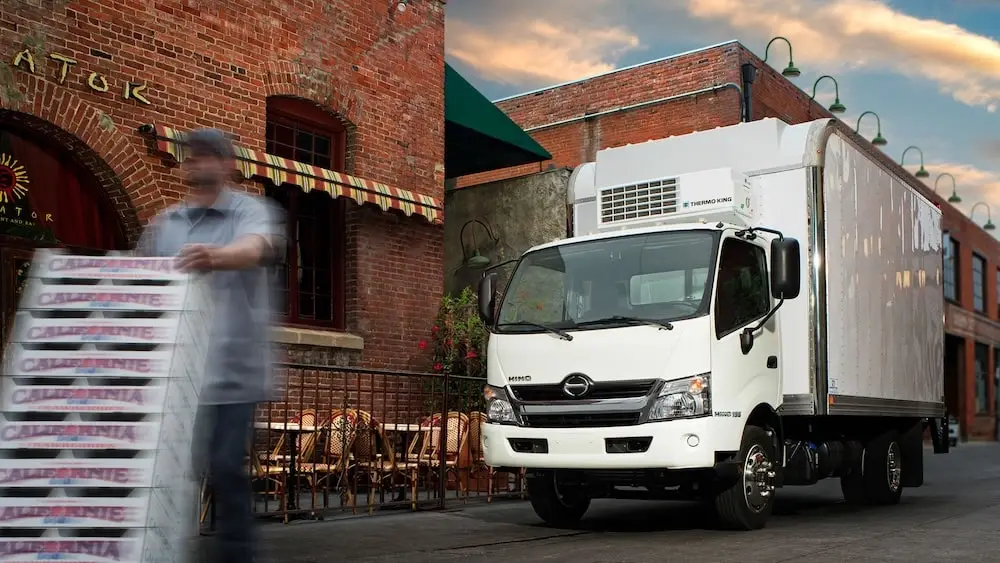
✅ To remember when putting your Hino truck into service in Quebec: Choosing the right truck insurance (mandatory to drive on the road) Completing the SAAQ registration process Select the appropriate truck class Pass the SAAQ mechanical inspection Register with the Registry of Heavy Vehicle Owners Comply with load and dimension standards Keep mandatory documents on board the truck You’ve just bought a Quebec Hino truck and you’re lost in the administrative procedures? Insurance, registration, inspections, truck classes… Don’t stress, we’ll guide you step by step to get your truck into service without wasting time. Find out how to comply with SAAQ regulations, choose the right Quebec truck insurance and pass the SAAQ Hino inspection, even on an imported used vehicle. Head for Montreal, Laval or the South Shore: your Hino truck will be running legally tomorrow! Obtaining the appropriate commercial insurance Commercial insurance protects your Hino truck and your business. In Quebec, it must include third-party liability, accident benefits and legal protection. Without these coverages, it’s impossible to drive a Hino truck legally. Specialized insurers such as HUB International or Assur360 Tek offer packages tailored to local needs. HUB International – Commercial fleet expert with customized coverage Assur360 Tek – Digital solutions for truck insurance in Quebec Intact Assurance – National network and expertise in heavy transport Comparison of essential truck insurance coverage in Quebec Type of cover Status Risks covered Civil liability Mandatory Bodily injury and property damage caused to third parties Accident Benefits Mandatory Medical expenses and loss of income after an accident Legal protection Mandatory Defense in the event of a claim-related dispute Cargo Optional Loss of or damage to transported goods Property damage Optional Hino truck collision repairs To simplify the process, call us today at 450-641-1115. Our experts will help you choose the best insurance for your Hino truck, whether you’re in Montreal, Laval or on the South Shore. Registering with the SAAQ The SAAQ registration process for your Hino truck begins with the submission of mandatory documents. You’ll need valid proof of insurance, the vehicle’s certificate of origin and official identification. If your truck exceeds 3,000 kg, head to an SAAQ center to finalize the process. If you’re located on the South Shore, contact Hino Boucherville for personalized assistance with your administrative formalities. Choosing the right truck registration class Hino trucks in Quebec are registered according to their gross vehicle weight rating. Above 4,500 kg, Class 3 applies to commercial trucks. Choose according to use: local or regional transport with a certified heavy-duty vehicle. The SAAQ requires registration in the Registre des véhicules lourds for professional activities. Truck registration renewal costs: General freight – Commercial vehicles 2 axles3001 kg to 4000 kg 2-axle4001 kg and over 3 axles 4 axles 5 axles 6 axles and more Insurance contribution (incl. tax) 129,78 $ 129,78 $ 248,41 $ 248,41 $ 417,68 $ 417,68 $ Fees 5,35 $ 5,35 $ 5,35 $ 5,35 $ 5,35 $ 5,35 $ Registration fees 525,00 $ 911,00 $ 1 581,00 $ 2 320,00 $ 2 831,00 $ 3 880,00 $ Total 660,13 $ 1 046,13 $ 1 834,76 $ 2 573,76 $ 3 254,03 $ 4 303,03 $ Cost of registration renewal: General freight – Farm vehicles 2 axles3001 kg to 4000 kg 2-axle4001 kg and over 3 axles 4 axles 5 axles 6 axles and more Insurance contribution (tax included) 87,40 $ 87,04 $ 127,95 $ 127,95 $ 206,27 $ 206,27 $ Fees 5,35 $ 5,35 $ 5,35 $ 5,35 $ 5,35 $ 5,35 $ Registration fees 231,00 $ 387,00 $ 663,00 $ 960,00 $ 1 216,00 $ 1 632,00 $ Total 323,75 $ 479,75 $ 796,30 $ 1 093,30 $ 1 427,62 $ 1 843,62 $ Initial inspections required for Hino trucks Imported or used Hino trucks must pass an SAAQ inspection inspection before being put on the road for the first time in Quebec. This inspection ensures that the vehicle complies with Quebec safety standards. It covers braking systems, tires and visibility features. To avoid delays, discover the steps of the SAAQ mechanical inspectionmechanical inspection, designed to validate the conformity of your Hino truck. This process is crucial for both new and used vehicles. Brakes – Checking disc and pad efficiency and wear Tires – Checking tread condition and optimum pressure Steering – Inspection of steering components and excessive play Lighting – Testing low beam, brake lights and indicators Structure – Analysis of body and chassis for critical defects Failed SAAQ inspections are often the result of faulty brakes or worn tires. Call us today at (450) 641-1115 to anticipate necessary repairs and pass your SAAQ inspection in Montreal, Laval or on the South Shore. Registration in the Register of Owners and Operators of Heavy Vehicles Owners of Hino trucks in Quebec must register with the Registre des propriétaires et exploitants de véhicules lourds. This mandatory process, managed by the Commission des transports du Québec, validates the vehicle’s legal compliance. Provide the required documents to obtain the attestation and drive legally. Documents to keep in your Hino truck Always keep the registration certificate and proof of insurance on board your Hino truck in Quebec. The safety patrol report and daily log must also be available. Failure to do so can result in fines from the Commission des transports du Québec. Checking loads and dimensions for your Hino truck Your Hino truck in Quebec must comply with weight and dimension standards. In Quebec, a 19T forwarder can support 20 pallets, but no more than 2.55 meters in width. A SAAQ inspection validates compliance. Exceed these limits and you risk fines or delays in Montreal, Laval or on the South Shore. Thanks to their robustness and adapted design, Hino trucks easily meet Quebec requirements in terms of loads and dimensions. Regular checks prevent accidental overloads or overruns. Call us today at(450) 641-1115 to check specifications and avoid the penalties associated with a non-compliant vehicle. Comparison of insurers for heavy vehicles in Quebec Choosing between insurance, registration

✅ Express summary: How to reduce the fuel consumption of your Hino truck: Drive smoothly: up to 20% fuel savings Maintain a constant speed: ideally 80-90 km/h depending on the model Check tire pressure: under-inflation = +5% fuel consumption Change your filters regularly: up to 25% savings with a clean filter Optimize truck loading: 1 tonne less = -5 to -10% fuel savings Plan your routes intelligently: avoid Montérégie traffic jams Limit air conditioning: it can consume +25% in urban areas Regular engine maintenance: oil change, oil, brakes = + reliability Track your consumption with a dedicated tool: identify discrepancies Test alternative fuels: B20 biodiesel, additives or premium fuels Tired of your Hino truck’s exploding fuel budget? Find out how to reduce the fuel consumption of your Hino 195, 268 or other truck, thanks to fuel-efficient driving tips and precise mechanical maintenance. We’ll show you concrete ways to reduce your liters per 100 km, preserve your engine and adapt your driving style to the roads of Montérégie and Laval. Drive smoothly to save fuel Aggressive driving increases the fuel consumption of a Hino truck by 20 to 40%. By avoiding hard acceleration and late braking, you preserve the reliability and robustness of Hino trucks, thus reducing fuel consumption. Smooth styling also optimizes fuel efficiency. Accelerate smoothly to avoid unnecessary overspeeding. For a Hino truck, shift up quickly without forcing the engine speed. This eco-driving technique reduces average fuel consumption by 15 to 25%, depending on the Hino model. Anticipate deceleration to avoid sudden braking. Use engine braking rather than the brake pedal to conserve kinetic energy. In Montérégie and Laval, these practices limit speed variations, reducing fuel consumption by 20%. In the Montérégie region, Laval’s varied roads and hilly terrain (altitude between 4m and 65m) call for adapted driving habits. With a Hino truck, you cansave 3 to 5 liters over 500 km by driving at a constant speed and with greater anticipation. Maintain a constant speed on the road Frequent speed variations increase fuel consumption of Hino trucks by 20-40%. Regular styling reduces overspeeding, optimizing fuel efficiency. Stable speed maintenance avoids fuel consumption peaks due to repeated acceleration. Cruise control is useful on freeways and flat terrain. It is activated above 50 km/h via the steering wheel controls. In the Montérégie region, deactivate it in rough or icy conditions for greater safety. Here are the optimum speeds recommended for each Hino truck model: Hino 195: 80 to 90 km/h unladen, 70 to 80 km/h fully laden Hino L6: 90 to 100 km/h without load, 80 to 90 km/h with standard load Hino XL8: 85 to 95 km/h on highway, adjust according to terrain in Montérégie These ranges improve average fuel consumption, depending on the transmission and weight carried. Good route planning prevents traffic jams. Use tools like Google Maps or Mappy to get around traffic jams. In the Montérégie region, use main roads to keep your speed constant. In Quebec winters, reduce your speed and stay away from other vehicles. Mandatory winter tires (December 1 to March 15) improve grip. On winding roads, adapt your speed at bends and intersections. Check tire pressure regularly Insufficient pressure increases tire rolling resistance. A drop of 0.3 bar results in 6% more resistance. Under-inflation of 20% increases fuel consumption by 5%, according to Hino models. Recommended tire pressure for Hino trucks Model Axle Tire type Current size Recommended pressure Hino L6 Front 16-ply radial 11R22.5 or 295/75R22.5 100 to 110 PSI Rear Radial twin 11R22.5 or 295/75R22.5 90 to 100 PSI Hino XL8 Front 16-ply radial 11R22.5 or 315/80R22.5 110 to 120 PSI Rear Radial twin 11R22.5 or 295/75R22.5 95 to 105 PSI Hino 195 Front 12-ply 225/70R19.5 (G-rated) 95 PSI Back 12-ply 225/70R19.5 (G-rated) 95 PSI Urban delivery trucks need to check their tires every month. Temperature influences pressure: a drop of 10°C reduces it by 0.1 bar. Regular filter maintenance completes this check. Use a special truck pressure gauge for accurate measurement. Check pressure when cold, i.e. 2 hours after last trip. If hot, subtract 0.3 bar from the recommended value for optimum setting. Under-inflation is expensive. 35% of trucks run on under-inflated tires, resulting in 14.5% higher fuel consumption. Rigorous maintenance reduces these costs and extends the life of Hino tires by 15%. Use clean filters to optimize engine performance Air, oil and fuel filters protect the Hino engine. A clogged air filter reduces oxygen intake, increasing fuel consumption by 10-25%. Original Hino parts offer better filtration thanks to finer pleats. A clogged air filter forces the engine to pump harder, increasing fuel consumption by 10-25%. Black smoke, sluggish acceleration or an engine light signal a clogged filter. Change the air filter every 2 to 4 years or 40,000 to 60,000 km. A dusty environment requires more frequent replacement. Genuine Hino parts are more resistant to wear thanks to optimized filter material. Here are the signs that a filter needs changing on a Hino truck: Dirty air filter indicator on dashboard Decreased engine power or difficulty accelerating Abnormally high fuel consumption Fuel filter warning light These symptoms affect system efficiency and require prompt maintenance to avoid increased costs. Optimize truck loading to reduce fuel consumption Each additional tonne increases fuel consumption by 5 to 10%. A 40-tonne Hino truck consumes 30 to 40 L/100 km. Tire rolling resistance, influenced by load, accounts for 30% of consumption. Reducing unnecessary weight optimizes fuel efficiency. Even weight distribution avoids overloading an axle. Use an axle load calculator to position goods. Balanced weight distribution improves stability and protects the Allison transmission by reducing mechanical stress. A high fill rate reduces average fuel consumption by 0.7% for every 1% of load removed. Prioritize full loads to avoid multiple trips. Hino models with Allison transmission benefit from an optimal balance between transported volume and economy. In Montérégie and Laval, use software like Route4Me to organize deliveries. Avoid congested highways like Highway 20 during rush hour. Use alternative routes to reduce frequent stops and fuel
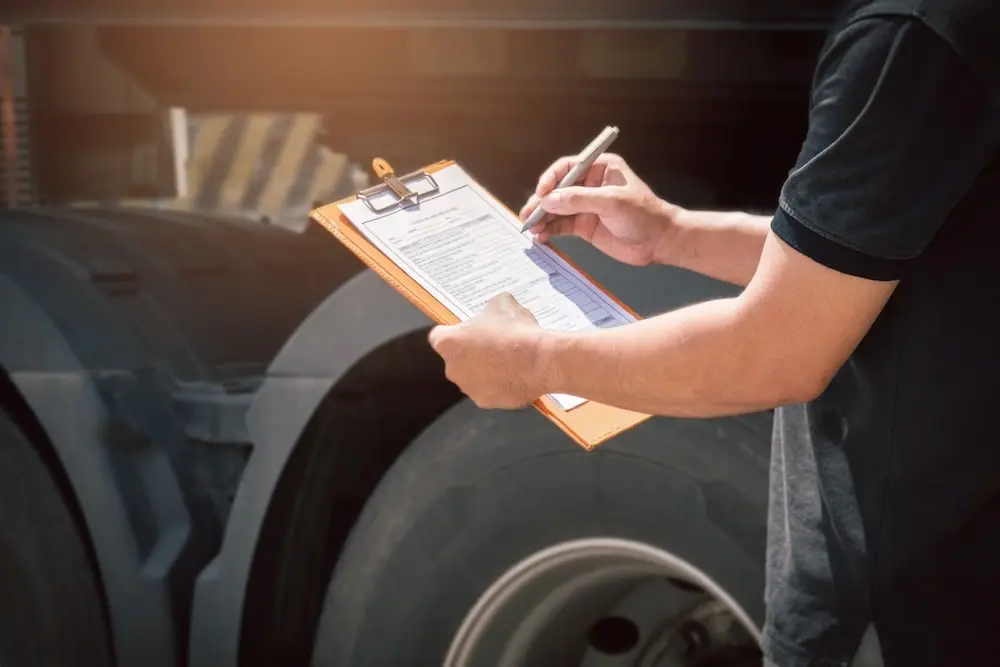
Find out more about the daily mandatory truck safety check in Quebec. We’ll give you a FREE checklist and report!


All rights reserved © Groupe National Hino.INC. Powered by WebPlify